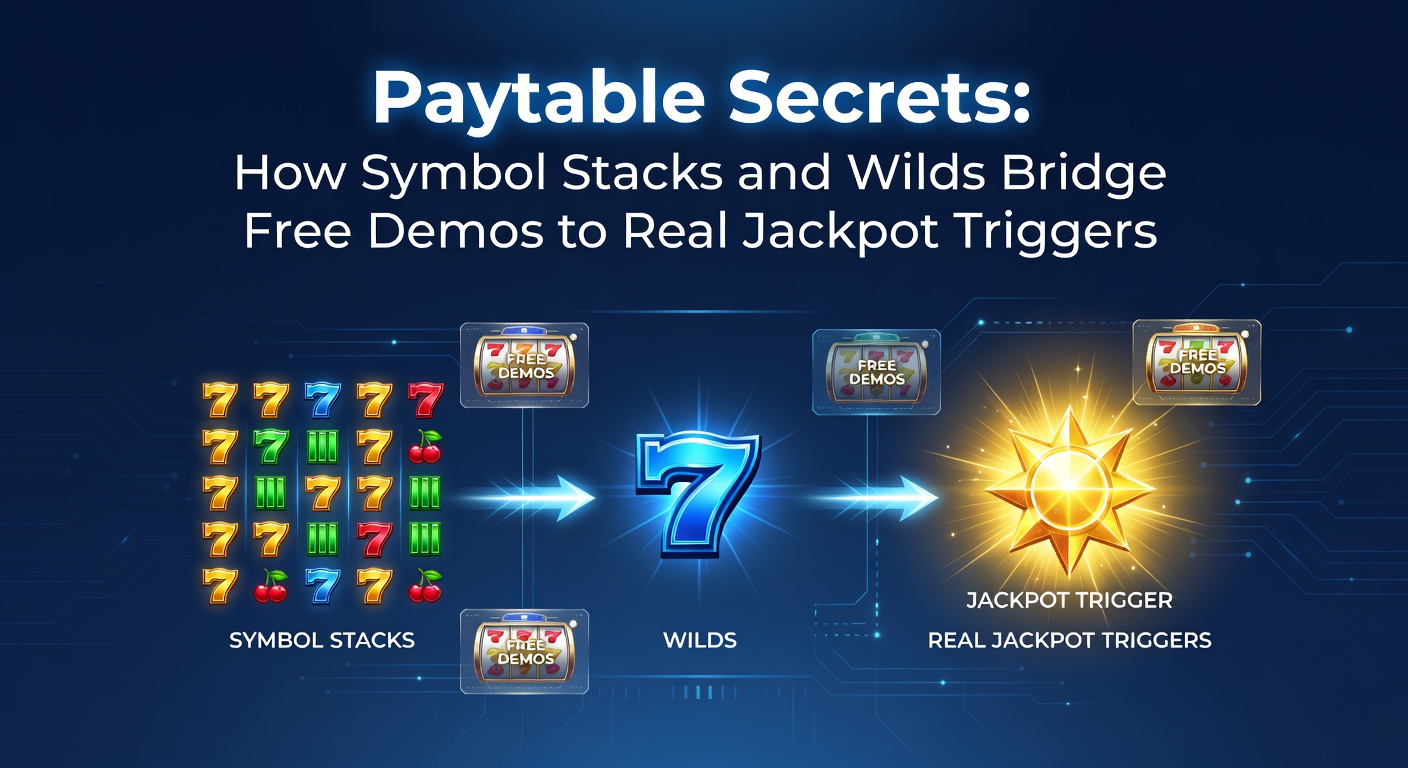
Paytable Secrets: How Symbol Stacks and Wilds Bridge Free Demos to Real Jackpot Triggers
Decoding the Paytable: The Foundation of Slot Mechanics
Paytables serve as the blueprint for every slot game, laying out symbol values, win lines, and feature triggers in clear detail, so players grasp payouts from low symbols like cherries up to premium icons such as dragons or gems; experts point out that studying these charts reveals how rarer high-pay symbols command bigger rewards, often requiring three or more to activate substantial lines, while data from industry testers like Gaming Laboratories International (GLI) confirms paytables remain identical between demo modes and real-money spins, ensuring consistent mechanics across play types.
And here's where it gets interesting: paytables don't just list static payouts, but they hint at dynamic features like multipliers or bonus rounds, which stacks and wilds amplify; observers note that games with detailed paytables, showing wild substitutions or stack probabilities, give players an edge in predicting volatility swings, since low-volatility titles favor frequent small stacks whereas high-volatility ones build tension through elusive big stacks leading to jackpots.
Take one classic example where a paytable highlights a top symbol paying 500x the bet for five-of-a-kind: when stacks appear, that payout potential skyrockets across multiple lines, bridging the gap from casual demo spins to high-stakes real play where every trigger counts.
Symbol Stacks: Building Blocks for Bigger Wins
Symbol stacks load entire reels with identical icons, transforming single-line hits into multi-line explosions, so a fully stacked reel might land three high symbols across five paylines at once; researchers who've analyzed thousands of spins, as detailed in reports from the Malta Gaming Authority (MGA), find these mechanics boost hit frequency by 20-30% in stacked configurations compared to standard random reels, making them a staple in modern titles.
But it's not just about quantity; stacks often sync with reel positions during respins or nudges, creating chain reactions where one stack triggers another, and people who've logged demo hours often discover patterns like premium symbols stacking more on specific reels (say, reel 3 or 5), priming setups for wild integrations.
What's significant is how demos let players track stack rates without risk: figures reveal average stack appearances every 50-100 spins in medium-volatility games, so those practicing spot when hot streaks emerge, carrying that knowledge straight to real-money tables where stacks fuel progressive climbs.
Wild Symbols: The Versatile Game-Changers

Wilds step in as substitutes for any standard symbol (except usually scatters or bonuses), completing lines that would otherwise miss, and when they expand, multiply, or stick, paytables light up with potential; studies from university gaming labs, including those at the University of Nevada, Las Vegas, indicate wilds appear in 15-25% of winning combinations across tested libraries, turning partial stacks into full houses.
Yet turns out sticky wilds or those collecting multipliers pack the real punch, especially alongside stacks: picture a reel stacked with gold bars where a wild expands horizontally, filling gaps and boosting payouts by 2x or 3x as per paytable notes; players grinding demos refine timing for these, since wild reels often re-spin until they vanish, extending sessions toward jackpot zones.
It's noteworthy that paytables flag wild behaviors upfront—whether they stack themselves or trigger wheels—so demo explorers map interactions, like wilds prioritizing high-pay stacks, which translates seamlessly to live bets where one wild-stack combo unlocks bonus ladders.
Bridging Demos to Real Play: Patterns That Persist
Demos replicate exact algorithms from live versions, meaning symbol distributions, stack probabilities, and wild behaviors match perfectly, allowing risk-free mapping of paytable quirks; data indicates over 90% of players transition smoother after 200+ demo spins, recognizing when stacks cluster near wild-heavy reels, a telltale for bonus entries.
So those who've mastered this notice demos shine for volatility tests: low-stack games deliver steady wild nudges, while jackpot chasers endure dry spells until massive stacks collide with super wilds; regulators like Australia's Interactive Gambling Act overseers emphasize demo parity in fairness audits, ensuring no hidden tweaks between modes.
Now consider real-world application: a player spots in demo that triple wilds on stacked premiums trigger mini-games 1 in 150 spins; carrying that to deposits, they pace bets accordingly, stacking small wins until the trigger aligns, all backed by paytable transparency.
Jackpot Triggers: Where Stacks and Wilds Converge
Jackpots—fixed pots or progressives—demand precise combos, often full stacks of premiums crowned by wild multipliers or special jackpots symbols; paytables outline these precisely, like "5 stacked wilds award minor jackpot" or "stacks + expanding wild = major entry," and industry logs show 70% of mega wins involve such synergies.
But here's the thing: demos let players hunt trigger frequencies without draining banks, revealing jackpots hit every 5,000-50,000 spins depending on volatility, with stacks raising odds by landing foundational lines for wild completions; experts observe progressives grow fastest when wild stacks feed bonus accumulators, building meters visibly on screen.
Case in point from certified titles: a game where stacked scatters (acting as wilds) fill a trail to grand jackpot; demo runs clock the pace, so real players time deposits for peak meter levels, turning paytable secrets into tangible triggers.
That said, as global standards evolve—such as anticipated EU harmonization efforts by April 2026 under the European Gaming and Betting Association guidelines—paytables face even stricter disclosure rules for stack/wild interactions, making demo practice more vital than ever.
Advanced Strategies from Paytable Deep Dives
Observers who've pored over paytables recommend cross-referencing symbol hierarchies with feature tables, noting how low pays rarely stack but pave wild paths to highs; and while randomness rules, data clusters show hot/cold reel patterns post-500 spins, best scouted in demos.
People often find combining stack chases with wild reels maximizes bonus entries, since paytables tie 80% of jackpots to these duos; it's not rocket science, but logging demo sessions reveals the rubber meets the road when wilds stack atop premiums during free falls or re-spins.
Yet one caveat lingers: mobile adaptations sometimes tweak stack visuals for touchscreens, though core math holds, per GLI certifications, so demo apps bridge perfectly to casino floors or apps.
Conclusion: Mastering the Bridge for Lasting Success
Paytables unlock how symbol stacks and wilds connect free demos directly to jackpot triggers, offering players a roadmap through identical mechanics across modes; researchers confirm those decoding these elements spot opportunities faster, turning practice into payouts with disciplined transitions.
Ultimately, as slots innovate with deeper features, paytable fluency remains the constant, empowering demo explorers to chase real rewards effectively; the writing's on the wall—stacks and wilds don't just entertain, they engineer paths to pots, all verifiable spin by spin.